2026 Top 10 Best Materials for Sustainable Construction

Time:2026-10-18 Author:Charlotte
0%

The 2026 construction industry faces a practical question: which materials reduce environmental harm without weakening safety, durability, or affordability? This guide examines the Best Materials For Sustainable Construction through a project-based lens. It considers embodied carbon, recycled content, local availability, maintenance needs, and end-of-life recovery. A material can look green on paper, yet perform poorly in a humid building or a remote construction site.

Real projects reveal these differences. Low-carbon concrete may reduce cement emissions, but its mix design must suit local standards and curing conditions. Reclaimed timber can bring warmth and character, although moisture damage and inconsistent grading require careful inspection. Cellulose insulation feels lightweight in the hand, while its fire and moisture performance depends on correct installation. Small details matter. Poor sealing wastes energy.

This overview compares options such as mass timber, recycled steel, bamboo, rammed earth, recycled aggregates, cork, cellulose, and bio-based composites. Each section will address practical strengths, limitations, maintenance demands, and suitable applications. Environmental product declarations can support credible comparisons, but they should not be treated as perfect answers. Data boundaries differ. Supply chains change. Some certifications may confirm responsible sourcing, but they cannot replace independent technical judgment.

No material is perfect. That matters.

A thoughtful selection process combines life-cycle evidence with local knowledge, building codes, climate data, and contractor experience. The most sustainable choice may not be the newest product. Sometimes, it is a durable material already available nearby, installed correctly and maintained for decades. This guide aims to support informed decisions, while acknowledging that sustainability remains a moving target rather than a finished checklist.
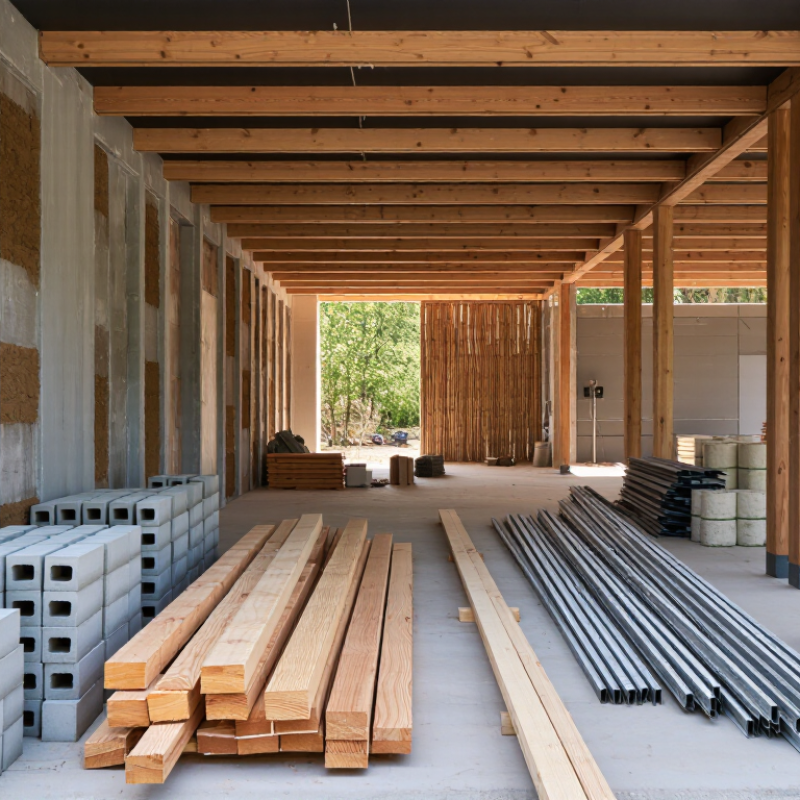
2026 Top 10 Best Materials for Sustainable Construction

Sustainability Criteria for Modern Construction Materials

Sustainable construction begins with measurable criteria, not attractive labels. A modern material should reduce embodied carbon, use fewer virgin resources, and perform reliably over decades. Its extraction must avoid severe ecological damage. Manufacturing should limit toxic emissions and excessive energy use. Clear environmental product declarations can support comparison, although data quality still varies between suppliers.

The strongest 2026 candidates include mass timber, recycled steel, low-carbon concrete, bamboo, rammed earth, reclaimed brick, recycled glass, cellulose insulation, cork, and agricultural-fiber panels. Each material needs a different test. Engineers should check structural capacity, fire behavior, moisture resistance, maintenance needs, and end-of-life recovery. A material with low factory emissions may fail in a humid climate. That failure creates waste.

Local sourcing matters. Transporting heavy earth blocks across a continent can erase their environmental advantage. Reclaimed brick may carry excellent history, but inconsistent sizes can increase labor and mortar use. Cellulose insulation stores carbon and fills wall cavities well. Poor installation, however, can invite moisture problems. Life-cycle assessment should include extraction, transport, construction, repairs, and demolition. It should also examine worker safety and indoor air quality.

There is no perfect material. That is uncomfortable. Project teams should disclose assumptions, compare alternatives, and revisit decisions when evidence changes. A small pilot wall, moisture test, or supplier audit can reveal more than a polished sustainability claim.

The Top 10 Sustainable Construction Materials in 2026

The Top 10 Sustainable Construction Materials in 2026

Sustainable construction now demands measurable carbon reductions, not attractive claims. The UNEP 2023 Global Status Report for Buildings and Construction found that buildings consume about 34% of global energy and create roughly 37% of energy-related and process emissions. Material selection matters.

The leading ten options are low-carbon concrete, recycled steel, engineered timber, bamboo, recycled aggregates, rammed earth, adobe, hempcrete, cellulose insulation, and mycelium-based panels. Low-carbon concrete can reduce cement content through supplementary materials, while recycled steel benefits from established recovery systems. Engineered timber stores biogenic carbon, but forest sourcing and fire design require careful verification. Bamboo grows quickly, yet transport and treatment can weaken its environmental advantage. Recycled aggregates reduce quarrying, although performance varies by contamination and grading.

Cellulose insulation fits tightly around timber frames. Hempcrete offers moisture buffering and thermal comfort, but it usually needs a separate structural system. Earth walls provide thermal mass and a textured, hand-built surface. They can also demand skilled labor. Mycelium panels remain promising, though durability evidence is still developing. No material is automatically sustainable.

Tips: Request an Environmental Product Declaration, compare whole-life carbon, and check local transport distances. Review structural, fire, moisture, and end-of-life data before specifying. The World Green Building Council’s embodied-carbon guidance supports this whole-life approach. In practice, designers should test assumptions. A material with a low factory footprint may perform poorly after long-distance shipping. That uncomfortable detail is easy to miss.

2026 Top 10 Best Materials for Sustainable Construction

Indicative cradle-to-gate embodied carbon intensity of commonly specified sustainable construction materials

Lower values indicate lower upfront embodied carbon per kilogram of material. Bio-based materials may show negative values when biogenic carbon storage is included. Actual performance varies with sourcing, manufacturing processes, transport, recycled content, and project-specific Environmental Product Declarations (EPDs).

Environmental and Structural Benefits of Each Material

2026 Top 10 Best Materials for Sustainable Construction

Environmental and Structural Benefits of Each Material

Recycled steel reduces mining demand and can be recycled repeatedly without losing major strength. Its high tensile capacity supports slender beams and long spans.

Bamboo grows quickly and offers impressive strength when properly treated. However, moisture and insect protection remain essential.

Reclaimed timber stores existing carbon and brings warmth to interiors. Each piece needs inspection for decay, fasteners, and hidden damage.

Cross-laminated timber reduces structural weight and can shorten construction time. Its performance depends on moisture control and careful fire engineering.

Rammed earth uses local soil, lowering transport impacts and providing thermal mass. It performs best with suitable soil and wide protective roof edges.

Hempcrete offers insulation and moisture buffering, but it usually needs a separate structural frame.

Cork provides renewable insulation and absorbs vibration under floors and walls.

Cellulose insulation reuses paper waste and fills awkward cavities effectively. It needs proper fire treatment and protection from persistent dampness.

Recycled concrete aggregate reduces landfill use and demand for newly quarried stone. Engineers must test absorption and strength before specifying it for heavily loaded elements.

Low-carbon concrete can cut cement-related emissions through supplementary materials. Its slower curing may complicate schedules.

These choices are not perfect. Project climate, workmanship, maintenance, and local supply can change the result dramatically. In practice, measured performance matters more than attractive claims.

Applications, Limitations, and Maintenance Requirements

2026 Top 10 Best Materials for Sustainable Construction

Low-carbon concrete suits foundations, slabs, and high-rise frames. Its limitation is slower strength development. Cure it carefully, then inspect cracks during seasonal temperature changes. Recycled steel works well for beams and columns, while corrosion protection remains essential in humid sites. Mass timber reduces structural weight and construction waste, but moisture monitoring cannot be optional. The GlobalABC 2023 report states that buildings and construction used over 34% of global energy in 2022 and produced about 37% of energy-related and process emissions.

Bamboo offers fast-renewing structural components and interior finishes. It needs sealed joints and protection from insects and persistent moisture. Hempcrete provides breathable wall insulation, yet it cannot replace structural framing. Cellulose insulation performs effectively in roofs and walls, but leaks can cause settlement and mold. Cork supports acoustic floors and thermal insulation, although heavy traffic may compress it. Rammed earth creates durable walls in suitable climates, but poor drainage can damage their surfaces. The International Energy Agency identifies cement as responsible for roughly 7% of global carbon dioxide emissions, making material selection especially important.

Recycled plastic panels suit landscaping, cladding, and moisture-prone interiors. Their long-term fire and ultraviolet performance still needs careful verification. Reclaimed stone can last for decades, but transport impacts may erase part of its environmental benefit. Maintenance plans should specify inspections, repair intervals, moisture readings, and replacement access. My field experience suggests designers often overstate “low carbon” claims before checking transport, coatings, and service life. That is a weakness worth correcting.

How to Choose the Right Material for a Sustainable Project

Choosing sustainable construction materials in 2026 requires more than selecting recycled content. Project teams should examine carbon emissions, service life, maintenance, local availability, and end-of-life recovery. According to the 2023 Global Status Report for Buildings and Construction, buildings and construction created about 37% of global energy-related and process emissions. Material decisions therefore deserve early attention.

Use life-cycle assessment data, not attractive marketing claims. Environmental Product Declarations can show a product’s manufacturing emissions, recycled content, and transport impact. Concrete with lower clinker content may reduce embodied carbon, while responsibly sourced timber can store carbon during its service life. However, timber is not automatically sustainable. Poor forest management, short product life, or long-distance shipping can change the result. Steel may support reuse, but its production remains energy intensive. I have found that local climate and workmanship often matter as much as the material itself. This is an uncomfortable point. A theoretically greener material can fail when installers lack experience.

Tips: Request verified environmental data before approval. Compare materials by whole-life carbon, not purchase price alone. Check moisture resistance, fire performance, repair access, and expected lifespan. The International Energy Agency also emphasizes reducing material demand and improving efficiency across buildings. A smaller structure can sometimes outperform a larger “green” one. Review assumptions with an independent sustainability professional, and document every trade-off. Mistakes happen. Transparent records make them easier to correct.

FAQS

What makes a construction material sustainable?

It should reduce whole-life carbon, use resources efficiently, and remain durable locally. Factory emissions alone are not enough. Transport, maintenance, and disposal can change the result.

Which materials can reduce cement-related emissions?

Low-carbon concrete replaces part of the cement with supplementary materials. It suits foundations, slabs, and structural frames. Strength may develop slowly. Careful curing matters.

Why is recycled steel useful?

Recycled steel reduces mining demand and can be recycled repeatedly. Its tensile strength supports slender beams and long spans. Humid sites still need corrosion protection.

What should designers check before using timber?

Check moisture exposure, decay, fasteners, hidden damage, and sourcing records. Engineered timber can reduce structural weight and construction waste. Fire design cannot be overlooked.

Is bamboo automatically environmentally friendly?

No. Bamboo grows quickly and can provide strong structural parts or interior finishes. Treatment, sealed joints, insect protection, and transport distance require careful review.

Where do hempcrete and cellulose insulation work best?

Hempcrete provides insulation and moisture buffering, but it needs a separate structural frame. Cellulose fills awkward cavities in roofs and timber walls. Persistent dampness can cause settlement or mold.

What are the limitations of earth-based materials?

Rammed earth and adobe provide thermal mass and textured surfaces. They work best with suitable soil, skilled labor, drainage, and wide roof edges. Poor moisture protection can damage walls.

How should recycled aggregates and newer materials be evaluated?

Test recycled aggregate absorption, grading, contamination, and strength before heavy structural use. Mycelium panels remain promising, but durability evidence is incomplete. Recycled plastic panels need fire and ultraviolet testing.

What should a maintenance plan include?

Specify moisture readings, crack inspections, repair intervals, and replacement access. Seasonal checks matter for concrete and timber. Sustainable choices can fail without ordinary maintenance.

How can teams avoid misleading sustainability claims?

Request environmental product data and compare whole-life carbon. Check transport, coatings, service life, and end-of-life options. Some choices look excellent on paper. Field performance may disagree.

Conclusion

The 2026 guide to the Best Materials For Sustainable Construction explores how modern building materials can reduce environmental impact while supporting safety, durability, and long-term performance. It introduces key sustainability criteria, including low embodied carbon, responsible sourcing, recyclability, energy efficiency, renewable content, and resistance to weathering. The article reviews ten promising materials, such as recycled metals, reclaimed wood, bamboo, low-carbon concrete, recycled aggregates, rammed earth, hemp-based products, cellulose insulation, bio-based composites, and high-performance glass.

Each material is evaluated according to its environmental and structural benefits, practical applications, limitations, maintenance requirements, and suitability for different climates and building types. The guide also explains how designers and builders can compare life-cycle impacts, local availability, installation needs, costs, and expected service life before making a decision. By balancing performance, resource efficiency, and project goals, readers can select sustainable materials that support healthier buildings and more resilient communities.

Charlotte

Charlotte

Charlotte is a seasoned marketing professional with a deep understanding of the company's portfolio and a passion for elevating its presence in the market. With a keen eye for detail and a commitment to excellence, she ensures that our professional blog is regularly updated with insightful articles......